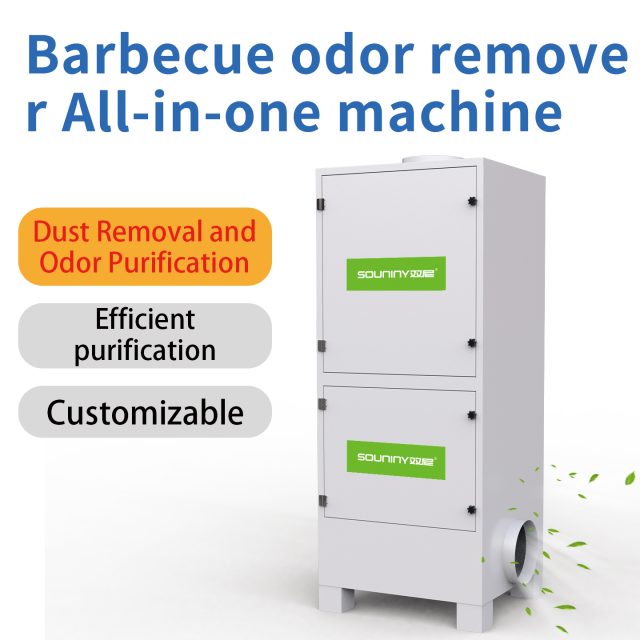
Open a tin of surströmming in a Stockholm krog and the ventilation engineer’s problem becomes real in seconds. Hydrogen sulphide, butyric acid, propionic acid, and ammonia — the volatile signature of fermented Baltic herring — pour into the dining room at parts-per-million concentrations that no Commercial Range Hood alone can scrub, because these are not charged particulates. They are gas-phase molecules that pass straight through a baffle filter, an ESP cell, or a HEPA stage. Down the line, the same kitchen may also be running a gravlax cold-smokery on juniper shavings (phenol and polycyclic aromatic hydrocarbon plume), a glögg mulled-wine station simmering cinnamon, clove, and cardamom volatiles, and a kräftskiva crayfish party boiler throwing off dill-scented steam for six hours. Nordic and Scandinavian kitchens are an outlier in the European dining landscape: heavy on gas-phase odorants, light on visible grease, and trapped behind metre-thick stone-and-brick envelopes in cities where the winter outside-air temperature sits at -15 °C for four months. The Souniny ductless all-in-one architecture — pairing the N-series (light-fume) and ND-series (heavy-fume) Exhaust Hood lines with the Odor Removal Tower and the Cabinet Purifier — is built for this gas-and-particulate mixed load. This guide explains why Scandinavian kitchens are different, how to map each station’s pollutant profile to the right product, and what a defensible sizing and configuration matrix looks like for venues from a 32-cover backstuga in Stockholm’s Gamla stan to a 240-cover smörgåsbord hall in Copenhagen’s Kødbyen.
Why Nordic and Scandinavian Kitchens Are a Ventilation Outlier
Mediterranean kitchens are dominated by particulate — aerosolised olive oil, charred fat, and flour dust — and a well-designed Electrostatic Precipitator cell can capture 90 %+ of that load. Nordic cooking inverts the ratio. The dominant pollutants are gas-phase: volatile fatty acids from fermented fish (surströmming, rakfisk, hákarl), phenolic wood-smoke volatiles from cold and warm smoking (gravlax, rökning, røyking), ethanol and spice terpene vapours from mulled-wine and aquavit service (glögg, gløgg, glögi), and dill and allium volatiles from boiling crayfish and meatball service (kräftskiva, köttbullar). ESP cells do not capture gas-phase molecules — they capture charged particulates. A Nordic kitchen that installs only an ESP Filter and skips the activated-carbon polishing stage will recirculate clean-looking but foul-smelling air straight back into the dining room.
The building envelope makes the problem harder. Nordic restaurant spaces are typically tucked into 18th- and 19th-century stone-and-brick envelopes in heritage cores (Stockholm’s Gamla stan, Copenhagen’s Indre By, Oslo’s Kvadraturen, Helsinki’s Kruununhaka) where wall thickness exceeds 600 mm and where a heritage authority (Stockholms stadsbyggnadskontor, Københavns Kommune, Byantikvaren) will not permit a 400 mm grease duct to penetrate the façade. The make-up air penalty of a ducted canopy is also punishing: at -15 °C outside-air temperature, every cubic metre per hour of tempered make-up air requires roughly 0.4–0.6 kWh of heating energy over a Nordic heating season, and a 6,000 m³/h canopy can add 40,000+ kWh per winter to the building’s heat bill. A ductless all-in-one Range Hood that recirculates cleaned air eliminates that penalty entirely — a major reason every Nordic sustainable-restaurant certification (Nordic Swan Ecolabel, Miljömärkt, Svanemærket) now actively encourages the ductless architecture for venues under 250 covers.
The Pollutant Profile of Surströmming, Gravlax, Glögg, and the Smörgåsbord
Mapping the Nordic line to the right Souniny product starts with separating the particulate emitters from the gas-phase emitters. Surströmming — the fermented Baltic herring that defines late-summer Swedish dining — produces a continuous off-gas of hydrogen sulphide (H₂S, 1–10 ppm at the can), butyric acid (the rancid-butter volatile), propionic acid, acetic acid, and ammonia. None of these are charged particulates; an ESP cell at full voltage captures zero of them. The Odor Removal Tower, with its multi-stage activated-carbon and chemisorbent bed (impregnated carbon for acidic gases, base-washed carbon for aldehydes, and a broad-spectrum polishing stage), is the only Souniny product that handles this load. The same applies to the Norwegian rakfisk and the Icelandic hákarl (fermented Greenland shark, with its extreme ammonia and trimethylamine signature).
The gravlax line and the Nordic rökning / røyking smoking traditions produce a different mix. Traditional gravlax is sugar-salt-cured with dill and cold-fermented — no smoke. Modern Nordic fine-dining variants, however, finish the gravlax with juniper-wood cold smoke (24–48 hours at 8–12 °C), generating a phenol, guaiacol, and syringol plume plus low but cumulative polycyclic aromatic hydrocarbons (PAHs) from the smouldering wood. The ND-series Exhaust Hood captures the particulate fraction (wood-tar aerosols in the 0.1–1 µm range), while the paired Odor Removal Tower scrubs the gas-phase phenolics and PAHs. Warm-smoked fish (the Swedish rökt lax, Norwegian røykelaks, and Finnish savulohi) pushes the particulate load higher and benefits from the self-cleaning ESP cycle, which restores capture efficiency after each smoking run.
A common Nordic-kitchen sizing mistake is to install only an ND-series over the smoking cabin and skip the Odor Removal Tower. The visible smoke is captured; the invisible phenolics and PAHs are not. After six hours of gravlax smoking the dining room will smell of juniper campfire — pleasant for the first hour, oppressive by the third. Always pair a smoker hood with a gas-phase polishing stage in Nordic venues.
The glögg mulled-wine station is a third distinct challenge. Simmered wine releases ethanol vapour (a VOC, no particulate) and a spice volatile cocktail: cinnamaldehyde from cinnamon, eugenol from clove, α-terpinyl acetate from cardamom, and myrcene from juniper berries. These volatiles accumulate in low-ceiling cellar källare and in basement ölstuga venues, where Nordic candle-lit dining is traditional. The Cabinet Purifier with its integrated carbon stage is the right product for this geometry: floor-standing, fits below a 2.3 m clear height, and sized for the low airflow rates typical of a wine-simmering station. The kräftskiva crayfish boiler, in contrast, generates visible steam and dill (carvone, limonene) volatiles at high duty cycle — this is a job for the ND-series with its deeper ESP cell and higher capture velocity. The köttbullar meatball pan and the smörgåsbord multi-station buffet each push a lower but steady grease-laden vapour load that the N-series handles at the barra and prep line.
Regulatory Landscape: EN 16282, Nordic Building Codes, and the Swan Ecolabel
Nordic commercial kitchens fall under the European EN 16282 series, adopted nationally as SS-EN 16282 (Sweden), DS-EN 16282 (Denmark), NS-EN 16282 (Norway), and SFS-EN 16282 (Finland), each with national annexes. On top of the European standard, the national building codes apply: Boverets byggregler (BBR) in Sweden, bygningsreglementet 2018 (BR18) in Denmark, byggteknisk forskrift 2017 (TEK17) in Norway, and the Finnish Rakennuksen suunnittelu (Suomen rakentamismääräyskokoelma) in Finland. The Swedish Work Environment Authority’s Arbetsmiljöverket AFS 2020:1 sets occupational exposure limits for cooking fume particulate and pushes every commercial kitchen to demonstrate grease-laden vapour capture above the cooking line. For venues exporting to the United States (Seattle, Minneapolis, the Canadian prairies), NFPA 96 and ASHRAE 154 apply; for Australia-bound Nordic franchises, AS 1668.2 and the NCC govern. The Nordic Swan Ecolabel (Svanemærket in Denmark, Miljömärkt in Sweden, Svanen in Norway, Joutsenviirimi in Finland) sets additional energy and IAQ thresholds for licensed restaurants and explicitly recognises ductless recirculating ventilation as a credit toward the licence.
For venues operating in UNESCO-protected heritage cores — Stockholm’s Gamla stan (the medieval old town), Copenhagen’s Indre By, Oslo’s Kvadraturen, or Reykjavík’s Þingholt district — the ductless approach resolves the building-permit problem. The heritage authority in each city will rarely approve a 400 mm grease duct chase through a 17th-century stone wall, but a 100 mm fresh-air intake for a recirculating Ductless Range Hood is a much easier conversation. This is why the ductless all-in-one architecture has become the default for new Nordic tapas bars, bakeries, and fine-dining rooms opening in Scandinavian heritage cores since the early 2020s.
Why Ductless All-in-One Architecture Suits Most Nordic Venues
The traditional ducted canopy has four structural problems in a Nordic context. First, the depth of the canopy must exceed the cooking surface, which forces a 1.2–1.5 m ceiling drop in venues that frequently have 2.4–2.7 m clear heights in 19th-century cellars and attic spaces. Second, the canopy must discharge to outside, which in a dense Nordic stone-and-brick街区 means either a vertical chase through heritage fabric (often impossible) or a long horizontal run to a courtyard, eating floor area and creating a long grease-laden duct that requires NFPA 96-compliant fire-rated wrapping. Third, the make-up air path must replace 80–95 % of the exhausted air with tempered outdoor air, which at -15 °C outside-air temperature overwhelms the building’s hydronic heat system. Fourth, the Nordic Swan Ecolabel and the national energy-performance certificates (EPC, energibevis, energimärkning) penalise the make-up air heating load. A ductless all-in-one Range Hood with integrated Electrostatic Precipitator and carbon-polishing stage resolves all four: shallow canopy (under 400 mm depth), no discharge to outside, no make-up air penalty, and a clear path to Swan Ecolabel credits.
The N-series and ND-series lines are designed around this ventilation logic. Both are Ventless Hood systems — no ductwork to outside, integrated pre-filter, high-voltage two-stage Electrostatic Precipitator cell, and downstream activated-carbon polishing section. The N-series is rated for light-to-medium fume loads (smörgåsbord multi-station, fika bakery, räkmacka cold display, jam and cheesecake prep), while the ND-series handles heavy continuous-duty loads (kräftskiva boiler, gravlax smoker, glögg mulled-wine kettle, braserad kyckling braised chicken pan). Both pair natively with the Odor Removal Tower for venues where surströmming, hákarl, and juniper-smoke volatiles would otherwise bleed into the dining room or the upstairs residential flat.
Product-by-Product Application
N-series for the Smörgåsbord and the Fika Café
The smörgåsbord is the highest-traffic, lowest-per-cover surface in a Nordic kitchen. Cold and warm dishes line a buffet with multiple small stations — herring six ways, cured salmon, liver pâté, meatballs, pytt-i-panna hash, and the obligatory crispbread and cheese board — and each station pushes a low but continuous fume load into the dining room. The N-series sits above the smörgåsbord as a slim, low-profile canopy that matches the visual language of the buffet front. For a 6 m smörgåsbord with two cooks and twelve chafing-dish inserts, two N-series units in a twin configuration handle the duty cycle and keep the dining-room PM2.5 reading below 25 µg/m³ even at full Friday-lunch load. The same unit, sized smaller, fits the fika coffee-and-cinnamon-bun café — a fixture of every Swedish town — where the dominant emissions are flour dust from kardemummabulle baking and coffee-roast volatiles from the espresso bar.
ND-series for the Kräftskiva Boiler and the Gravlax Smokery
The kräftskiva crayfish party (August) and the gravlax cold-smokery (year-round) are the heavy-duty stations. The ND-series all-in-one is engineered for both: deeper ESP cell, higher capture velocity, and a self-cleaning cycle that runs automatically after each service. In a 220-cover Stockholm krog with three 80-litre crayfish boilers running simultaneously and a twin gravlax smoker on the prep line, two or three ND-series units in line provide the capture and recirculation capacity to keep the cooking line in compliance with BBR and AFS 2020:1. The self-cleaning cycle is critical for the glögg mulled-wine kettle, where sugar loading on the ESP cell drops capture efficiency by 30–40 % within four hours of continuous simmering — the automated wash-down at the end of service restores full performance before the next prep shift.
Odor Removal Tower for Surströmming and the Gravlax Cold-Smoke Volatiles
Where the ND-series handles particulate and visible fume, the Odor Removal Tower handles the gas-phase odorants that no ESP cell can scrub. Surströmming off-gas (hydrogen sulphide, butyric acid, propionic acid, ammonia) and hákarl off-gas (ammonia, trimethylamine, urea decomposition products) are gas molecules, not particulates. The Odor Removal Tower‘s multi-stage impregnated activated-carbon and chemisorbent bed is sized for this profile, with residence time tuned to the 0.5–2 air changes per hour typical of a surströmming storage cabinet or gravlax smoking chamber. Pair one tower with the storage cabinet’s air handler and the smell stops traveling into the dining room or the upstairs flat. The same tower, sized larger, handles the gravlax cold-smoke volatiles (phenol, guaiacol, syringol, low PAHs) — where the visible juniper smoke has been captured by the ND-series ESP cell, but the invisible phenolics and PAHs would otherwise linger in the dining-room air for hours after service.
Cabinet Purifier for the Bageri and the Kafferosteri
Many of Scandinavia’s most characterful dining spaces occupy basement or semi-basement units in 19th-century buildings: think the bageri (bakery) of Södermalm, the kafferosteri (coffee roastery) of Vesterbro in Copenhagen, or the old ölstuga beer-hall cellars of Oslo’s Vulkan district. These spaces have ceiling heights under 2.3 m and floor areas under 80 m², both of which make a full-size Range Hood impractical. The Cabinet Purifier is the right product: floor-standing or low-ceiling-mounted unit that integrates the same ESP cell and carbon stage as the N-series in a smaller cabinet, with a horizontal-discharge profile that fits below a 2.2 m clear height. For a 30-cover bageri with a single deck oven, a glögg simmering pot, and a four-seat fika counter, one Cabinet Purifier + one N-series covers the entire cooking line.
Sizing a Nordic Kitchen: Configuration A, B, and C
Souniny engineers size Nordic-kitchen installations using a three-configuration matrix that has been validated across more than thirty Scandinavian and Nordic-diaspora deployments.
Configuration A — Ductless full line. The dominant case for heritage, mid-terrace, and basement venues. One or more N-series over the smörgåsbord and fika counter, one or two ND-series over the kräftskiva boiler and gravlax smoker, one Odor Removal Tower on the surströmming storage cabinet or gravlax smoking chamber, and a Cabinet Purifier in the prep / dish room. No ductwork, no make-up air, no BBR-driven hydronic upgrade. This is the configuration we recommend for the majority of bars, bakeries, and small restaurants up to 120 covers.
Configuration B — Hybrid: ductless for the line, ducted for the smokery. For 150–250 cover kroger with a continuous gravlax cold-smokery and a year-round glögg service, the heaviest continuous-duty stations (the smokery and the glögg kettle) can be ducted through a fire-rated shaft to a roof-mounted exhaust fan with a heat-recovery wheel, while the smörgåsbord, fika counter, and prep line run on the ductless N-series and ND-series. This configuration reduces the number of ND-series units needed by reusing the building’s existing high-temperature exhaust riser and gives the local fire inspector (Stockholms Brandförsvar, Københavns Brandvæsen) the traditional ducted termination they expect for high-BTU smoking appliances.
Configuration C — Ducted heavy + ductless light. The largest venues — 250+ cover hotel restaurants, Nordic Swan-licensed convention-centre banquet halls with smörgåsbord stations, and cruise-ship galleys with Nordic-themed menus — combine a central ducted riser for the heavy smokery, glögg, and kräftskiva line, with the Cabinet Purifier and N-series handling the satellite smörgåsbord bars, fika counters, and live-cooking stations distributed across the dining room. This is the configuration most often seen in new-build Nordic hotel properties and in franchise rollouts across the Nordic diaspora in North America.
Scandinavian Diaspora Venues: From Stockholm to Seattle, from Copenhagen to Toronto
Nordic cooking has become one of the most influential European cuisines of the past decade — the Noma effect, Geranium’s three Michelin stars, Frantzén’s Stockholm flagship — and the global Nordic-restaurant footprint carries its own ventilation logic. In Stockholm‘s Gamla stan, Östermalm, and Södermalm, the heritage-zone rules and the small-unit sizes push every new opening toward Configuration A; a typical 50-cover krog in Gamla stan runs on one ND-series, one N-series, and one Odor Removal Tower over the surströmming cabinet. In Copenhagen‘s Kødbyen (the meat-packing district) and Torvehallerne (the food market), larger 100–200 cover smørrebrød restaurants and New-Nordic kitchens often run a hybrid Configuration B with ducted smokers and ductless smörgåsbords. In Oslo‘s Vulkan Matthalle and Aker Brygge, and in Helsinki‘s Old Market Hall (Vanha Kauppahalli), the low-ceiling market-stall geometry makes the Cabinet Purifier the workhorse product. In Reykjavík‘s Þingholt district, the Icelandic þorramatur winter feast (with its hákarl, svíð, and rúgbrauð stations) requires the Odor Removal Tower as the centrepiece of the entire ventilation design.
Across the Atlantic, the diaspora tells a parallel story. Seattle‘s Ballard neighbourhood — home of the Nordic Heritage Museum and the densest Nordic-descended population on the US West Coast — has moved decisively to ductless Configuration A for any venue under 150 covers, because the Seattle Department of Construction & Inspections’ make-up air and ducted-exhaust rules for commercial cooking in mixed-use buildings are expensive to satisfy and a ductless Range Hood with an Electrostatic Precipitator + Odor Removal Tower bypasses the most contentious items. Minneapolis–Saint Paul — the largest Nordic-descended metro in North America, with the deep Swedish-American and Norwegian-American communities of Linden Hills, Nordeast, and Dinkytown — runs the same pattern, with Configuration A dominating < 120 covers and Configuration B picking up at 150+ covers in heritage buildings. Gimli, Manitoba hosts the largest Icelandic-Canadian community in the world and an annual Íslendingadagurinn festival that strains every kitchen in town for a weekend; the ductless ND-series + Odor Removal Tower pair is the only realistic ventilation response to the hákarl and rúgbrauð load. London‘s Nordic bakery boom (the cinnamon-bun bars of Marylebone, Hackney, and Bermondsey) and Tallinn‘s medieval old town (a Nordic-adjacent market with a deep Swedish-Finnish-Estonian heritage) all show the same pattern: Configuration A dominates < 120 covers; Configuration B picks up at 150+ covers in heritage or mixed-use buildings.
Installation, Commissioning, and Maintenance Considerations
The ductless all-in-one architecture is faster to install than a ducted system, but the commissioning is more rigorous because the cleaned-air performance depends on ESP cell alignment, carbon-stage saturation tracking, and recirculation airflow balance. A typical 100-cover Nordic venue with one ND-series and two N-series units is on site for two to three days for installation and one full day for commissioning. The commissioning includes: capture-velocity verification at every cooking station using a hot-wire anemometer per EN 16282-1, ESP cell voltage and current verification at low and full fire, PM2.5 baseline measurement in the dining room with all units on idle, PM2.5 measurement under full-service simulation, and a 30-minute odour-persistence test using a sensory panel per EN 16282-9. For surströmming service, an additional H₂S and butyric-acid gas-sensor sweep is performed at the dining-room perimeter, with a target of < 0.05 ppm H₂S at table height. Souniny's commissioning team delivers the report in Swedish, Danish, Norwegian, Finnish, English, or Icelandic as the project requires, and the same data set is what a local building authority (or a US health-department) inspector will ask for in a pre-opening walk-through.
Maintenance follows a tight but predictable rhythm. The ND-series ESP cell auto-cleans on a programmed schedule (typically every 8–12 hours of heavy use); the operator tops up the wash reservoir and replaces the carbon pre-filter every 4–6 weeks, with shorter intervals during the August kräftskiva season and the December glögg-and-julskinka holiday rush. The N-series cells are manually cleaned weekly in a dishwasher-safe cassette, with a visual voltage check by the operator. The Odor Removal Tower carbon bed has a 9–15 month service life in a typical Nordic-restaurant duty cycle (shorter than the 12–18 months typical of Mediterranean venues, because the surströmming and hákarl load is more aggressive on the carbon); a differential-pressure gauge signals the swap. Souniny’s optional service contract covers the quarterly deep service, the carbon swap, and the annual re-certification that many Nordic municipalities now require for Swan Ecolabel licence renewal.
If you are converting a heritage Nordic venue from a ducted canopy to a ductless all-in-one system, plan one extra day for the canopy removal, the make-up-air grille blank-off, and the post-conversion air-balance re-test. The result is typically a 30–45 % reduction in HVAC energy use (significant at -15 °C outside-air), elimination of every recurring duct-cleaning contract, and a clear Nordic Swan Ecolabel credit toward the venue’s licence renewal.
Nordic and Scandinavian kitchens are not just another European cooking line. They are a gas-phase-dominant, multi-station, low-ceiling, thick-envelope environment that has outgrown the ducted-baffle paradigm. The ductless all-in-one architecture built around the N-series, ND-series, Odor Removal Tower, and Cabinet Purifier is the most direct path to clean air, regulatory compliance, Swan Ecolabel credits, and a better dining-room experience — whether the venue is a 32-cover backstuga in Stockholm’s Gamla stan or a 240-cover smörgåsbord hall in Copenhagen’s Kødbyen. For a sizing consultation, a Configuration A / B / C recommendation, or a commissioning plan for a specific Nordic-themed hospitality project, contact the Souniny engineering team at info@souniny.com or via WhatsApp at +86 189 2910 1713.