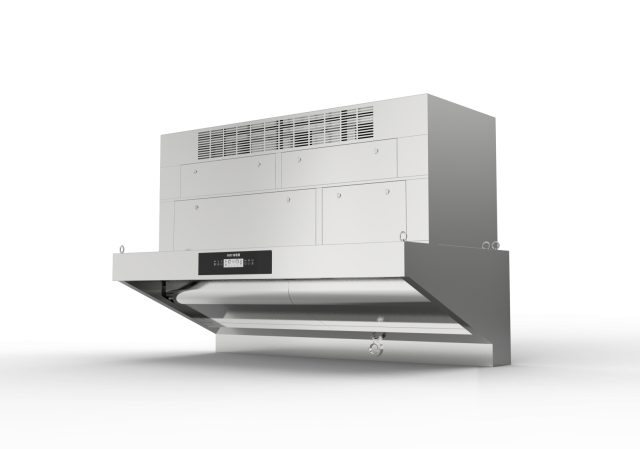
An Argentinian kitchen is a theatre of fire. At its heart stands the parrilla—a roaring charcoal grill where thick cuts of beef, lamb, and chorizo are seared over live embers, sending dense columns of grease-laden vapor and sub-micron particulate into the air. Nearby, empanadas tumble in deep fryers, chimichurri simmers on induction hobs, and dulce de leche bubbles in open pans. The result is a uniquely challenging emission profile: heavy charcoal smoke from open-fire grilling, high-temperature frying aerosols, and persistent odor compounds that cling to walls, furniture, and clothing. For restaurant owners, the question is not whether to ventilate, but how to do so without ripping open historic ceilings or running costly ductwork through leased spaces. Souniny’s ductless all-in-one ventilation line—the ND-series for heavy fume stations, the N-series for lighter load areas, and the Odor Removal Tower for deep deodorization—offers a purpose-built, no-duct solution that keeps the spirit of the parrilla alive while protecting staff, guests, and the building itself.
The Argentinian Kitchen: A Multi-Source Emission Profile
Unlike many Western kitchens that rely on a single dominant heat source, the typical Argentinian restaurant operates three or four distinct cooking zones simultaneously. Each zone produces a different class of airborne pollutant, and each demands a targeted extraction strategy.
Parrilla and Asado: Live-Fire Heavy Smoke
The parrilla is the soul of Argentinian cuisine. Hardwood or charcoal burns at temperatures exceeding 500 °C, radiating intense heat upward into the meat while releasing a complex cocktail of combustion by-products: carbon monoxide, nitrogen oxides, polycyclic aromatic hydrocarbons (PAHs), and fine particulate matter (PM2.5 and below). The dripping fat from ribeye, short ribs, and flank steak vaporizes on contact with the embers, creating a secondary plume of grease-laden vapor that is both flammable and acrid. In an enclosed kitchen, these emissions accumulate rapidly. Without effective capture at source, they migrate into dining areas, triggering smoke alarms, coating surfaces in a sticky grease film, and exposing kitchen staff to occupational respiratory hazards recognized by the World Health Organization.
The traditional asado—often prepared on a separate counter or outdoor-style indoor pit—adds another layer of complexity. Whole sides of lamb or pork are slow-roasted over indirect heat for hours, generating a lower but steadier stream of smoke rich in volatile organic compounds (VOCs) and odor-active molecules. This is not a problem that a simple ceiling fan or domestic extractor can solve. It demands a Commercial Range Hood with industrial-grade suction, multi-stage filtration, and the capacity to handle continuous heavy fume loads.
Empanadas and Fried Specialties: High-Temperature Frying Aerosols
While the parrilla dominates the savory menu, the empanada station is equally critical to revenue. These filled pastries are deep-fried or baked in batches, with the fried variant producing significant oil mist and aerosolized fat. At 180–190 °C, cooking oil breaks down into aldehydes, acrolein, and ultrafine particles that penetrate deep into lung tissue. In a compact kitchen where the fryer sits meters from the grill, the combined load of charcoal smoke and frying vapor creates a super-saturated atmosphere that overwhelms generic ventilation systems. The N-series light-duty all-in-one range hood is engineered precisely for this class of moderate-to-heavy mixed fume, capturing oil mist at source before it can convect upward and contaminate the ceiling plenum.
Cheese Aerosols, Simmering Sauces, and Steam
Provoleta—grilled provolone cheese—is a staple appetizer that releases lipid-rich aerosols when the cheese surface chars. Chimichurri, the iconic parsley-garlic-oregano sauce, is prepared in bulk on induction or gas hobs, releasing aromatic steam and fine herb particulate. Dulce de leche, simmered for hours in shallow pans, generates sticky sugar-laden vapor that condenses on cold duct surfaces and becomes a cleaning nightmare. While these emissions are lighter than parrilla smoke, they contribute to a layered odor profile that defines the restaurant’s atmosphere—for better or worse. Managing them requires not just particle capture, but active deodorization.
Why Ductless Ventilation Fits Argentinian Restaurants
Argentinian restaurants are often housed in heritage buildings, narrow urban storefronts, or shopping-mall food courts where external ductwork is impractical, prohibited, or architecturally destructive. Running a 400-mm exhaust duct through a century-old brick wall in Buenos Aires-style interiors, or penetrating the facade of a leased Parisian or Madrid location, can cost tens of thousands of dollars and months of permitting. Ductless systems eliminate this constraint entirely.
A ductless Commercial Range Hood recirculates air through an integrated filtration train rather than exhausting it externally. The captured pollutants—grease, smoke, particulate, and odor—are removed inside the unit, and clean air is returned to the kitchen at near-ambient temperature. This closed-loop architecture is ideal for Argentinian kitchens for three reasons:
First, it removes the need for roof penetration, fire-rated shaftways, or make-up air systems. In historic buildings with protected facades, this can be the difference between opening on schedule and a six-month regulatory delay.
Second, it allows the kitchen layout to follow culinary logic rather than duct routing. The parrilla can sit where the chef wants it—against an interior wall, in a corner, or front-of-house for theatrical effect—without being tethered to an external exhaust point.
Third, it simplifies compliance with evolving international standards. EN 16282, UL 710B, and ASHRAE 154 all recognize recirculating grease-removal systems as valid alternatives to ducted exhaust, provided the filtration efficiency meets specified thresholds. Souniny’s all-in-one units are CE certified and tested to capture sub-micron particulate at rates that satisfy these standards.
Matching Products to Cooking Zones
ND-Series: The Heavy-Duty Workhorse for Parrilla and Asado
The ND-series heavy-duty all-in-one range hood is designed for the most aggressive emission sources in commercial kitchens. Its stainless-steel electrostatic precipitator cell captures grease and particulate through high-voltage ionization and collection, while the integrated centrifugal fan maintains high face velocity across the full canopy width. For a parrilla station burning hardwood charcoal for six to ten hours per service, the ND-series provides the sustained extraction capacity needed to keep the cooking line visibly clear and thermally comfortable.
The unit’s multi-stage filtration train—typically comprising a mesh pre-filter, ESP cell, and activated-carbon deodorization layer—addresses each pollutant class in sequence. Pre-filters intercept large grease droplets and char particles, extending ESP cell life. The ESP stage removes sub-micron particulate down to 0.1 microns, including the PAHs and fine soot generated by fat-flare on charcoal. The carbon stage absorbs odor-active VOCs, preventing the characteristic “smokehouse” smell from migrating into dining rooms or neighboring retail units. Because the system is ductless, there is no grease accumulation in hidden ductwork to create a latent fire hazard—a critical advantage given the open flames of the parrilla.
N-Series: Balanced Extraction for Empanada Fryers and Sauce Stations
Not every station in an Argentinian kitchen faces the thermal brutality of the parrilla. The empanada fryer, the chimichurri prep station, and the dulce de leche simmering zone produce moderate loads of oil mist, steam, and aromatic vapor that do not require the full industrial capacity of the ND-series. The N-series light-duty all-in-one range hood is the optimized choice for these secondary lines.
Compact yet powerful, the N-series employs the same core ESP technology as its heavy-duty sibling but in a footprint suited to smaller canopy widths and lower ceiling heights. It captures frying aerosols before they rise into the general kitchen volume, protects the fryer operator from chronic oil-mist exposure, and prevents the sticky grease film that otherwise accumulates on overhead lighting, shelving, and HVAC diffusers. In mixed kitchens where the parrilla and fryer operate side by side, pairing an ND-series over the grill with an N-series over the fryer creates a zoned ventilation strategy that is both more efficient and more economical than a single oversized ducted hood.
Odor Removal Tower: Deep Deodorization for Charcoal and Garlic
Charcoal smoke and chimichurri garlic are powerful sensory signatures. While they may be appetizing in moderation, persistent residual odor in dining areas, cloakrooms, and adjacent apartments is a common source of customer complaints and lease violations. The Odor Removal Tower—a standalone deodorization unit paired with the N-series or ND-series all-in-one hoods—provides a dedicated second stage of odor control.
The tower deploys a high-capacity activated-carbon bed optimized for the VOC profiles typical of live-fire cooking: aldehydes from fat pyrolysis, phenols from wood smoke, and sulfurous compounds from garlic and onion preparations. In high-traffic Argentinian steakhouses where the dining room sits meters from the open kitchen, the Odor Removal Tower ensures that guests smell the food on their plates, not the exhaust from the grill. For basement or mall-based locations without natural ventilation, it is often the decisive factor in passing environmental inspection.
Compact Solutions for Small-Format Argentinian Eateries
Not every Argentinian concept is a full-size parrilla. Empanada boutiques, fast-casual milanesa counters, and coffee-and-pastry kiosks serving alfajores and medialunas operate in footprints as small as fifteen square meters. These micro-kitchens still produce frying vapor and baking odors, but they cannot accommodate a full-size canopy hood.
The Cabinet Purifier is a self-contained, floor-standing or countertop unit designed for exactly this constraint. Positioned adjacent to the fryer or oven, it draws polluted air through a side intake, processes it through ESP and carbon filtration, and releases cleaned air at low velocity. No canopy is required, and the unit can be relocated if the kitchen layout changes. For entrepreneurs launching Argentinian fast-casual concepts in food courts, railway stations, or airport terminals, the Cabinet Purifier offers a plug-and-play air-quality solution that scales with the business.
Regulatory and Safety Considerations
Argentinian restaurants operating internationally—or Argentinian-themed venues in North America, Europe, and Australasia—must navigate a complex web of local regulations. NFPA 96 mandates grease-removal devices and automatic fire-suppression systems for solid-fuel cooking. EN 16282 specifies minimum filtration efficiency for recirculating kitchen ventilation. UL 710B governs the safety of ductless grease-extraction systems in the United States. ASHRAE 154 provides ventilation-rate guidance based on cooking appliance type and fuel.
Souniny’s ductless all-in-one systems are engineered with these standards in mind. The stainless-steel construction satisfies hygiene requirements in jurisdictions with strict food-safety codes. The integrated fire-suppression compatibility allows connection to wet-chemical or aerosol systems where required. And because there is no external duct to inspect, annual compliance audits are simplified—there are no hidden grease deposits, no corroded seams, and no roof-level exhaust points to maintain.
Choosing the Right Configuration
Every Argentinian kitchen is different, but the following configuration guidelines reflect typical deployments:
Full-service parrilla restaurant (80–150 seats): Install one ND-series heavy-duty all-in-one hood over each parrilla or asado pit. Add one N-series unit over the empanada fryer and sauce station. Pair the primary hood with an Odor Removal Tower if the dining room is within ten meters of the cooking line.
Fast-casual empanada counter (20–40 seats): A single N-series unit over the fryer and griddle is usually sufficient. Add a Cabinet Purifier if ceiling height is below 2.4 meters or if the counter operates in a shared food-hall stall without perimeter walls.
Basement or subterranean venue: Prioritize the Odor Removal Tower alongside the ND-series or N-series. Without natural ventilation paths, odor accumulation is the dominant risk, and carbon-stage deodorization becomes as important as particulate capture.
Front-of-house theatrical grill: Where the parrilla is visible to diners, aesthetics matter. The ND-series stainless-steel canopy can be specified in exposed finishes that complement interior design, while the ductless architecture eliminates ugly external duct runs that would destroy the visual impact of the open kitchen.
Souniny has been designing commercial kitchen exhaust purification systems since 2015. Our CE-certified, National High-Tech Enterprise facilities in Dongguan, China, produce the ND-series, N-series, Cabinet Purifier, and Odor Removal Tower lines used by restaurants across six continents. For a free ventilation assessment tailored to your Argentinian concept, contact us at info@souniny.com or via WhatsApp at +86 189 2910 1713.