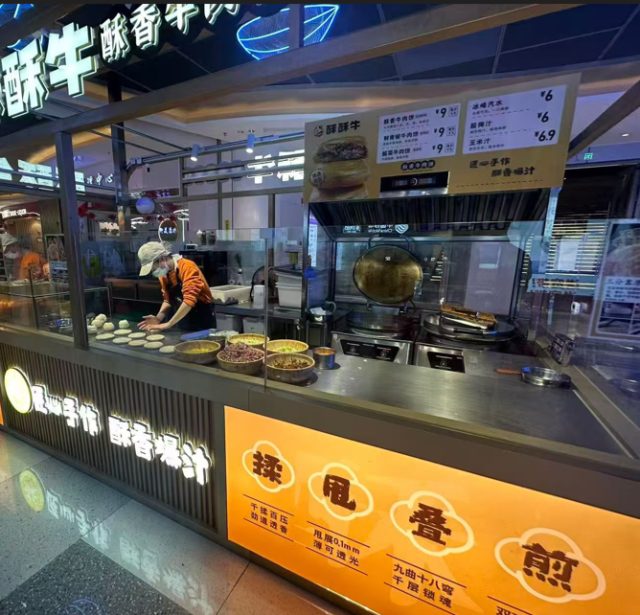
The poke bowl started as a Hawaiian snack and became one of the fastest-growing fast-casual formats of the past decade, with build-your-own salad bars riding the same wave of fresh, visible, made-to-order assembly. Walk into one and the kitchen looks cold: chilled wells, cutting boards, a rice station, rows of dressings. That visual is exactly why ventilation gets under-specified. Most poke and salad concepts cook more than their operators assume – a sear range for teriyaki chicken, a plancha for ahi tuna, a compact fryer for crispy garlic and shallots, a convection oven for roasted toppings. The fume is light and intermittent, but it is real grease and real odour, produced a metre from where guests eat. Treating that load correctly from day one is what keeps a light-concept kitchen compliant, clean and comfortable.
The Anatomy of a Cold Concept’s Hot Line
Inventory the average poke shop or salad bar and the equipment clusters into three groups. The first is genuinely cold: refrigerated prep wells, bain-marie tops, cutting stations. The second is hot but steam-dominant: rice cookers running through the day, soup kettles, hot wells holding warm proteins and grains. The third – the one that decides the ventilation design – is the sear group: an induction or gas range used for teriyaki chicken and seared tuna, a countertop plancha or panini grill, sometimes a single-basket fryer for tempura flakes, crispy shallots or churro bites on the dessert menu, and a small convection or speed oven for roasted vegetables.
The proportions vary by market. In Hawaii and on the US West Coast, searing tuna and chicken is standard practice. In European shopping centres, many operators add a grill for warm bowls. In Southeast Asia, a rice-and-protein line often runs from opening to close. Whatever the region, the pattern is consistent: the format sold itself as almost-no-cooking and grew a hot line anyway. Equipment schedules evolve one appliance at a time – a plancha here, a fryer there – and the exhaust design never gets revisited until something forces the question: a lease inspection, a landlord complaint, a hygiene audit or simply a dining room that smells of teriyaki at two in the afternoon.
What the Air Actually Carries
A sear range running above roughly 200 °C does three things to the air above it. First, oil mist: fine droplets of cooking oil become airborne as the food’s moisture flashes to steam, and part of that mist vaporises and re-condenses as sub-micron particulate – small enough to stay suspended, travel with the plume, and deposit as a film on stainless steel, glass and light fittings. Second, odour compounds: teriyaki and sesame glazes carry sugars that caramelise at searing temperatures and produce the characteristic sweet-brown smell, while seared fish adds its own protein-derived notes. Third, heat and water vapour: rice cookers and hot wells push out a warm plume that is mostly steam but which entrains oil mist from anything cooking nearby.
None of this is dramatic. There is no black smoke, no visible plume rolling across the ceiling. That is the trap. The pollutant load of a light-duty line is invisible in photographs and obvious after two weeks of operation: a tacky film on the sneeze guard, a faint fry smell in staff clothing, condensation on the front glass on cold mornings, and a grease layer inside whatever hood – if any – was fitted above the line.
Light duty is a classification, not an exemption. It describes the rate at which grease is released, not whether grease is released.
Why No Visible Smoke Still Fails Inspection
Mechanical codes are written around appliances, not around how smoky a cuisine looks. In the International Mechanical Code tradition used across North America and much of the Middle East and Asia, hoods over grease-laden-vapour-producing appliances are Type I: they must capture and treat grease and they carry fire-protection requirements. A sear range, plancha or compact fryer qualifies, even if it never produces visible smoke. Rice cookers and hot wells, which release mainly steam, fall toward Type II condensate treatment. NFPA 96 and ASHRAE 154 supply the detail: appliance classification, hood overhangs, and cleaning intervals that apply to light-duty equipment exactly as they do to heavy lines – only less often.
In Europe, EN 16282 frames the same logic through enclosure classes and filtration stages for kitchen ventilation systems, and individual countries layer their own requirements on top. Shopping-centre landlords, meanwhile, tend to write rules stricter than any code: no grease discharge into shared exhaust risers, no new penetrations through fire-rated slabs, condensate captured inside the tenant unit, and no cooking odour at the property line or at adjacent tenants.
There are two quieter reasons not to skip capture. Fire: grease film is fuel, and a light load that is never cleaned accumulates at exactly the same rate as a heavy load that is. Hygiene: in a concept whose entire appeal is visible freshness, airborne grease drifting onto a ready-to-eat salad line is a food-safety problem, and in jurisdictions that inspect allergen controls, airborne sesame and fish particles near open prep deserve attention too.
Sizing a Light-Duty Sear Line
Sizing starts with hood geometry, not airflow numbers. The canopy must cover the sear group with an overhang – about 150 mm on each side is the usual light-duty planning figure – so a 900 mm plancha beside a 400 mm fryer calls for a canopy of roughly 1.6 to 1.8 m. From there, the common planning arithmetic for a grease-producing line is on the order of 2,000 m³/h per metre of hood, which puts a 1.8 m light-duty canopy near 3,000-3,600 m³/h of treated airflow. Compare that with the 6,000 m³/h-and-up figures typical of a heavy wok or charcoal line and the load class becomes clear: roughly half the airflow of serious cooking, with duty cycles that are intermittent rather than continuous.
Two refinements matter in this format. First, do not oversize for theatre: excess face velocity on an open canopy wastes heated and cooled air and generates drafts across the counter, and the savings from a right-sized unit appear on the energy bill every month. Second, manage the steam deliberately: placing rice cookers and hot wells toward the back of the capture zone – or under a dedicated condensate hood where operations run large steam volumes – keeps water out of the grease-filter stage, where moisture loads filters prematurely.
If the unit has any duct route at all – a riser, a shaft, a short run to the rear wall – a ducted system with inline electrostatic precipitation is the classic answer, and it scales if the menu grows. Where there is no route, which is the case in most mall and street-front leases, the architecture has to treat the air where it is produced.
Placement: Malls, Small Boxes and Food Halls
The typical poke or salad site takes one of three layouts, and each constrains the ventilation decision differently. Mall units, often on lower-ground floors, have no exterior wall and no roof path; base-building risers belong to the landlord’s own system and rarely accept tenant grease. Street-front small boxes of 20-40 m² – kitchen 4-8 m², glazed façade, ceiling around 2.7-3 m – cannot hang a deep canopy without eating into the kitchen or blocking the sightline to the counter. Food-hall stalls sit inside a managed environment: per-stall budgets are tight, installation windows are overnight, and the hall operator wants zero odour complaints from neighbouring tenants.
All three layouts converge on the same conclusion: treat the air inside the unit, at the cookline, without touching the building. That is the definition of a recirculating ductless hood, and it is why light-duty concepts have become the format where ductless architecture wins most often – not as a compromise, but as the design that fits the lease.
The Design Response: Ductless Capture Sized to the Load
For kitchens without a duct route, a ductless range hood family such as Souniny’s covers exactly this load class. The architecture is a stainless canopy matched to the cookline, with treatment stages in sequence: a washable mesh or baffle pre-filter that catches droplets and protects the stages behind it, an electrostatic precipitation cell that charges and collects the sub-micron fraction a mechanical filter misses, and an activated carbon bed for the gas-phase odour the first two stages cannot touch. Cleaned air returns to the room, so there is no duct, no roof penetration and no landlord negotiation – most light-duty installations are a same-day job.
Where searing runs for long hours – a teriyaki line from open to close, or a menu known for its smell – the carbon stage deserves real capacity rather than a token thin bed. A dedicated Odor Removal Tower paired with the hood extends dwell time through a deeper carbon bed and keeps the dining room neutral even on fry-heavy days. The N-series light-duty ductless hoods are sized for exactly this pairing, and operators run the same combination for years on a simple wash-and-replace routine.
Menu growth changes the arithmetic. A Korean-style tabletop grill, a charbroiler or a heavy wok added to a poke concept moves the line from light duty into heavy-fume territory; the answer is either a ductless unit sized for the heavier load, or – where the building can support a real duct run – a ducted ESP purifier range with an inline centrifugal fan, which handles high volumes continuously and discharges through the duct rather than back into the room.
The format also has a mobile edge. Seasonal counters, university campuses, markets and pop-up events can serve poke and salads from a ventless catering cart with its own compact treatment – no fixed cookline, no lease modification, and a low-risk way to test a location before committing to a store.
Carbon: The Second Half of the Problem
Electrostatic precipitation collects particles; it does not collect gas. The molecules that make a dining room smell of last night’s sear are gas-phase, and the only practical in-unit answer is adsorption onto activated carbon. Three practical points decide whether a carbon stage works. Contact time: odour removal is a function of dwell time in the bed, so a deep bed at honest airflow beats a shallow cartridge pushed past its rating. Protection: carbon fouls quickly when oil reaches it, which is why the pre-filter and cell ahead of the bed must be kept clean – the carbon bed is the last line of defence, not the first. Replacement cadence: beds are consumables; in light-duty service with moderate searing hours, replacement typically lands in the multi-month range, best triggered by smell at the hood’s exhaust face rather than by the calendar alone.
A Maintenance Discipline for Low Loads
Low-fume kitchens fail audits for the same reason heavy ones do: routines that quietly stop. A workable light-duty cadence is simple enough to put on a laminated card. Daily: wipe the hood lip and capture area, glance at the pre-filter. Weekly: wash the pre-filter. Monthly: wash the electrostatic cell with degreaser, dry it fully, inspect the carbon stage. Quarterly: deep-clean the canopy, verify airflow indicators, and log the work – the log is what an inspector, landlord or insurer actually reads. Consumables such as cells, collector plates, sealing strips and carbon are wear items by design; budgeting for them as an operating cost rather than a surprise repair is part of running the format properly.
What to Have Ready Before You Order
Sizing a ductless unit for this format takes ten minutes if the information is on hand, and three rounds of email if it is not. The shortlist: the appliance schedule with power ratings and operating hours; the total hood length needed to cover the sear group with overhang; ceiling height and everything above the hood – sprinklers, beams, signage; the electrical supply available at the cookline; the landlord’s written rules on recirculating hoods and grease; and an honest view of where the menu will be in two years, because the cheapest hood is the one you only buy once.
A poke shop or salad bar will never look like a kitchen that needs ventilation engineering, and that is precisely the point: the load is small, hidden and easy to get wrong. Classify the appliances, size the canopy to the sear group, choose the architecture the building allows, and put a proper carbon stage behind the cell – the format stays fresh on the plate and neutral in the air, which is the whole product.