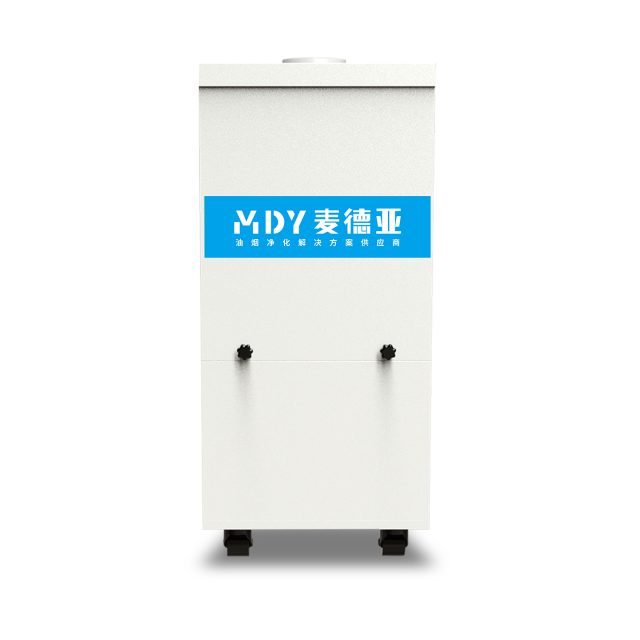
A satellite kitchen is not a scaled-down main kitchen. It is a remote cooking node that receives par-cooked ingredients, finishes them under time pressure, and sends them out through hotel room-service corridors, hospital wards, university dining halls or stadium concession stands. Because these spaces are rarely designed with full grease-exhaust risers, operators typically face three hard constraints: low headroom, shared HVAC zones, and a prohibition on new roof penetrations. Souniny answers this with a ductless product stack led by the Cabinet Purifier, supported by the N-series light-duty all-in-one range hood, the ND-series heavy-duty unit for flash-fry or finishing stations, and the Odor Removal Tower to neutralize odor molecules that electrostatic precipitation alone cannot capture.
1. What Makes a Satellite Kitchen Different
Satellite kitchens sit at the end of a central production pipeline. A hotel may produce stocks, sauces and portioned proteins in a main galley, then transport them to a 20–40 m² satellite room on every guest floor or beside the ballroom. A hospital may cook bulk meals in a central kitchen and regenerate or plate them in ward-level pantries. A university may prepare grab-and-go bowls in a remote production kitchen and finish proteins in front of students at a satellite servery. In every case the footprint is tight, the ceiling is often below 2.4 m, and the nearest grease duct is on another floor.
The emissions profile is also mixed. Unlike a full-service restaurant that concentrates all pollutants over a single cookline, a satellite kitchen generates:
- Reheating steam and oil mist from griddles, salamanders and induction finishers.
- Grease-laden vapor from shallow frying, wok finishing and sauce reduction.
- Volatile organic compounds (VOCs) from hot oil, spices and finishing butter.
- Odorous gases such as ammonia, hydrogen sulfide and aldehydes that migrate through corridor return-air grilles.
A conventional ducted solution would require a Type I hood, a vertical or horizontal duct run, a roof fan, make-up air, fire suppression and a kitchen electrostatic precipitator bank. In a satellite kitchen that architecture is usually impossible. The answer is a recirculating, ventless hood system that treats the exhaust at source and returns clean air to the room.
2. Why Ductless Is the Default Architecture for Satellite Kitchens
Building codes and operational realities push satellite kitchens toward ductless ventilation.
2.1 Headroom and Structural Limits
Many satellite kitchens are retrofitted into former storage rooms, linen closets, back-of-house corridors or basement utility spaces. Ceiling heights of 2.2–2.4 m are common. A full commercial range hood plus a 300–400 mm vertical duct consumes 500–700 mm of that space and leaves the cooking platform cramped and unsafe.
2.2 Shared HVAC and Fire Compartments
Satellite kitchens are often located inside air-conditioned public zones. Connecting a grease duct to the building return-air system is prohibited by NFPA 96, IMC §506 and EN 16282-1. A ductless range hood captures, purifies and discharges air back into the kitchen zone, isolating the exhaust stream from the rest of the building.
2.3 No Roof Penetration Rights
In leased spaces, hospitals, historic hotels and multi-tenant university buildings, adding a new roof stack is frequently blocked by lease terms, structural engineers or facade committees. Ductless equipment plugs into a standard power outlet and avoids landlord negotiations entirely.
3. Souniny Product Stack for Satellite Kitchens
The product mix depends on the satellite kitchen’s duty cycle and menu, but every installation should start with the most compact unit and scale up only where the menu justifies it.
3.1 Cabinet Purifier: The Lead Product
The Cabinet Purifier is the default choice for satellite kitchens because it is a self-contained, floor-standing or wall-mounted unit that combines a commercial range hood, multi-stage filtration and recirculating discharge in one cabinet. It requires no ductwork, fits under ceilings as low as 2.1 m, and can be rolled or lifted into position during off-hours to minimize disruption in operating hotels or hospitals.
For satellite stations that mainly reheat, plate and lightly finish, the Cabinet Purifier handles grease-laden vapor and sub-micron particulate without occupying the entire room. Its compact footprint leaves space for the under-counter refrigerators, hot holding cabinets and plating tables that dominate satellite workflows.
3.2 N-series Light-Duty All-in-One Range Hood
When the satellite kitchen performs more live cooking—sautéing vegetables, reducing pan sauces, grilling proteins on a flattop—the N-series light-duty all-in-one range hood becomes the workhorse. The N-series is a ductless range hood with built-in electrostatic precipitation and activated-carbon deodorization. It installs directly over the cookline and returns cleaned air into the kitchen.
The N-series is acoustically quieter than a ducted exhaust canopy plus roof fan, which matters when the kitchen shares a wall with guest rooms, patient wards or lecture theaters. Its recirculating design also eliminates the make-up air penalty that would otherwise force the building HVAC to heat or cool large volumes of replacement air.
3.3 ND-series Heavy-Duty All-in-One Range Hood
Some satellite kitchens include a flash-fry station, a charbroiler finishing zone or a small wok burner for made-to-order bowls. These stations generate the heaviest grease load in the room and need more capture velocity and holding capacity than the N-series. The ND-series heavy-duty all-in-one range hood provides the larger filter bank and stronger suction required for high-heat, high-grease tasks.
Because satellite kitchens are often staffed by rotating teams, the ND-series is also specified when the operator wants a single, future-proofed unit that can tolerate menu changes without redesigning the ventilation.
3.4 Odor Removal Tower: The Non-Negotiable Layer
Electrostatic precipitation is excellent at removing grease particles and sub-micron particulate, but it does not neutralize gas-phase odor molecules. In a satellite kitchen, where discharged air stays inside the building rather than leaving through a roof stack, odor control is critical. The Odor Removal Tower adds a packed activated-carbon bed and optional photocatalytic stage to adsorb and break down the VOCs, aldehydes and sulfur compounds that cause corridor complaints.
For hotels, this means room-service floors do not smell like breakfast at dinner time. For hospitals, it means patient wards remain free of cooking odors. For universities, it means the satellite servery can operate inside a mixed-use building without complaints from adjacent offices or classrooms.
4. Satellite Kitchen Scenarios and Configuration Maps
4.1 Hotel Room-Service and Banquet Satellite
A luxury hotel on a heritage site converts a former butler’s pantry on each residential floor into a room-service finishing kitchen. The menu is light: omelets, pan-seared fish, pasta and sauce reduction. Ceiling height is 2.3 m and the room sits above guest bedrooms, so no roof duct is permitted.
Recommended configuration: one Cabinet Purifier over the induction range for steam and light grease, one N-series ductless range hood over the salamander and plating zone, and a compact Odor Removal Tower plumbed into the return path. The result is code-compliant, odor-free room service without structural modification.
4.2 Hospital Ward Kitchen and Meal Reheating Station
Hospital satellite kitchens must meet hygiene, infection-control and fire-safety standards simultaneously. The HVAC is tightly controlled, odors are strictly regulated, and downtime for duct cleaning is unacceptable. A ventless hood system commercial configuration isolates the kitchen exhaust stream from the ward air supply and allows the unit to be rolled away for cleaning or replacement.
Recommended configuration: Cabinet Purifier for main reheating and plating, N-series for any live finishing, and an Odor Removal Tower sized for 24/7 odor protection. Stainless-steel surfaces and tool-free filter access support the hospital’s cleaning protocols.
4.3 University Remote Servery and Food Hall Satellite
A university dining hall adds a remote production kitchen in the basement of a residence hall to reduce congestion at the central servery. The menu includes stir-fry bowls, grilled sandwiches and fresh-cut fries. Grease loads vary by station, headroom is limited by steam pipes, and the space cannot connect to the building’s main exhaust shaft.
Recommended configuration: ND-series over the wok and fryer stations, N-series over the griddle and sandwich line, Cabinet Purifier for the cold prep and plating zone, and a central Odor Removal Tower treating the combined recirculated air. This mixed layout gives each station the right capture without adding ductwork.
5. Standards and Code Considerations
Satellite kitchens must comply with the same ventilation codes as full kitchens, but they do so through recirculating rather than ducted means.
- NFPA 96 (2024): allows listed recirculating exhaust systems when grease removal, fire suppression and odor control meet the same performance goals as ducted systems.
- IMC §506.3 / UL 710B: covers recirculating exhaust systems and specifies test methods for grease removal efficiency and odor reduction.
- EN 16282-1: defines requirements for commercial kitchen ventilation systems, including recirculating hoods with integrated filtration.
- ASHRAE 154: provides ventilation and fire-safety guidance for commercial cooking operations, applicable to satellite stations of any size.
- Local health and building codes: often require documented capture efficiency, maintenance schedules and proof that discharged air does not re-enter supply systems.
A Souniny satellite kitchen package ships with a commissioning report that documents ESP cell voltage, particle capture efficiency and odor breakthrough values, making it easier to satisfy inspectors who are unfamiliar with ductless technology.
6. Installation and Commissioning Best Practices
Proper commissioning is what separates a compliant satellite kitchen from a recurring odor complaint.
- Capture velocity test: verify that the hood face velocity pulls grease-laden vapor away from the operator’s breathing zone and into the filtration path.
- Particle-efficiency test: measure PM2.5 and PM10 levels at the discharge grille before and after commissioning; the Souniny ESP cell should deliver a sharp reduction in sub-micron particulate.
- Odor breakthrough scan: use VOC sensors at corridor return grilles and adjacent rooms to confirm the Odor Removal Tower is adsorbing aldehydes and sulfur compounds below nuisance thresholds.
- Fire-suppression interface: connect the unit’s fire dampers and suppression signals to the building fire alarm if required by local code.
- Maintenance schedule: wipe pre-filters weekly, wash ESP cells monthly, inspect carbon beds quarterly and replace carbon media every 12–18 months depending on grease and odor load.
7. Return on Investment: Why Ductless Wins in Satellite Kitchens
The business case for a ductless satellite kitchen goes beyond the equipment price.
- Capital savings: no roof stack, no grease duct, no make-up air unit and no landlord negotiations.
- Operating savings: recirculated air avoids the heating and cooling losses associated with exhausting conditioned air to atmosphere.
- Real-estate flexibility: a Cabinet Purifier can move with the kitchen, protecting lease investments when the operator relocates or reconfigures.
- Complaint reduction: odor-free discharge protects brand reputation in guest, patient and student environments where a single smell complaint can escalate into a regulatory review.
8. Choosing the Right Configuration for Your Satellite Kitchen
Start by mapping the satellite kitchen’s duties. Light reheating and plating favor the Cabinet Purifier. Live sauté and finishing call for the N-series. Heavy flash-fry, charbroiler or wok work demands the ND-series. Any satellite kitchen located inside an occupied building should include an Odor Removal Tower to handle the gas-phase pollutants that an ESP filter cannot capture. When the menu or duty cycle changes, the modular layout allows the operator to add or swap units without rebuilding the room.