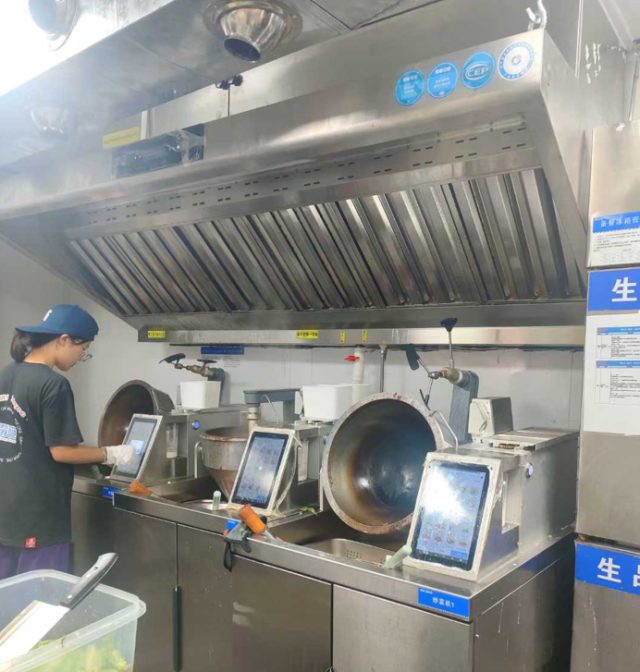
Seafood restaurants are among the most common foodservice formats on earth – from the fish-and-chip shops of London and Sydney and the oyster bars of New York and Boston, to Maryland crab houses, New England lobster shacks, Gulf Coast seafood boils, Latin American marisquerias, and seafood izakayas in Tokyo and Singapore. Yet the seafood kitchen presents a ventilation challenge that is categorically different from a typical grill house: it combines heavy-oil-fume deep-fryer lines, high-humidity steamers and stock pots, and low-threshold odor gases that no grease filter or electrostatic cell can capture. Solving all three simultaneously is what separates a seafood kitchen that protects its guests, staff, and neighbors from one that quietly builds a complaint file.
Why a Seafood Kitchen Needs a Different Ventilation Strategy
Most commercial kitchens are dominated by one or two pollutant classes. A steakhouse kitchen is particle-dominated; a bakery is flour-and-steam dominated. A seafood kitchen is tri-modal: it generates grease-laden vapor from frying, visible steam from boiling and steaming, and a family of nitrogen- and sulfur-based gas molecules that carry the smell of the sea – and the smell of seafood going past its prime. Each class demands a different control mechanism, which is why a single-technology solution fails in this environment.
Rule of thumb for seafood venues: if the ventilation design only handles smoke and grease, the restaurant will still fail its odor review – because the fish smell, the ammonia notes, and the sulfur notes bypass electrostatic capture entirely.
Pollutant Profile: The Five Stations of a Seafood Kitchen
Mapping the kitchen by station is the first step in any ventilation design. A seafood operation typically has five distinct pollution zones, each with its own particle size distribution, moisture load, and odor chemistry.
The Deep-Fryer Line: Sub-Micron Oil Mist and Acrolein
Fish and chips, fried calamari, crab cakes, clam strips, popcorn shrimp, and hush puppies all push the fryer bank to continuous duty during peak hours. High-turnover frying of battered seafood generates sub-micron particulate that settles slowly and migrates with air currents, plus acrolein and free fatty acids released as oil degrades. This is a heavy oil-fume load in the same class as a commercial fried-chicken line, and it is the station where the ND-series heavy-duty all-in-one purifier earns its place. The ND-series combines an integrated exhaust canopy, an electrostatic field for particulate capture, and self-cleaning capability that keeps collection efficiency high even under 12-hour fryer duty cycles.
Steamers, Boilers, and Stock Pots: Humidity and Protein Vapor
Lobster steamers, mussel pots, clam chowder kettles, crawfish boils, and fish stock pots release enormous volumes of saturated steam loaded with dissolved proteins and volatile compounds. This station is light oil-fume by particle mass but extreme in moisture and odor. Without capture, steam condenses on ceilings, hood interiors, and ductwork, creating the biofilm that fuels bacterial growth and persistent “old fish house” smell. The N-series light-duty all-in-one handles this zone efficiently, recirculating cleaned, dehumidified air back into the space rather than venting heat and humidity through the roof.
Grills, Sauté Pans, and Broilers: Butter Aerosol and Blackened Seasoning
Butter-poached lobster, seared scallops, grilled swordfish, and charred octopus generate butter aerosol – fine droplets of milk fat that are notoriously sticky and odorous when overheated – plus the acrolein spike of a hot sauté pan. Blackened fish techniques, which crust a fillet in spice at very high pan temperatures, release a visible plume of burning spice particulate. In a ductless configuration these stations sit under the ND-series canopy with the heavy-fume zone, or under a dedicated N-series unit where the line is lighter.
The Raw Bar and Prep Stations: Gas-Phase Odor from the Start
The raw bar – oyster shucking, crab picking, ceviche assembly, tuna and salmon butchery – is where seafood’s chemical signature is most concentrated. Fresh seafood continuously releases trimethylamine (TMA), ammonia, hydrogen sulfide, and dimethyl sulfide, compounds whose detection thresholds sit in the parts-per-billion range. The raw bar is also cold, meaning its “exhaust” is not a hot plume you can see; it is a slow, invisible bleed of odor molecules into the dining room. This zone is the strongest argument for the Odor Removal Tower as a mandatory component rather than an option.
The Dish Pit and Ice Room: Humidity and Condensation Control
High-volume dishwashing and ice storage add a continuous moisture load that most ventilation designs ignore. In a ductless system the recirculating purifiers dehumidify as they scrub, which keeps the dish pit, prep room, and walk-in door areas dry and free of condensation-related mold – an important detail for health-inspection performance and staff comfort.
The Gas-Phase Problem: Why ESP Alone Cannot Handle Seafood Odor
An Electrostatic Precipitator – including the Souniny ESP Purifier line and the integrated cells inside the N-series and ND-series – is exceptionally good at what it does: charging and collecting sub-micron grease particles and smoke at high efficiency. What an ESP cell cannot do is collect gas molecules. Trimethylamine, ammonia, hydrogen sulfide, and dimethyl sulfide are individual molecules in the gas phase; they pass straight through an electrostatic field. A kitchen that relies on an ESP alone will capture the smoke beautifully and still smell like a fish market.
The Odor Removal Tower closes that gap with a gas-phase adsorption stage – engineered carbon and odor-scrubbing media that adsorb the nitrogen and sulfur compounds responsible for seafood odor. This is the same principle that makes ductless purification viable in Nordic kitchens handling fermented-herring gas loads, applied to the everyday, high-frequency odor load of a working seafood restaurant. In a seafood venue the Odor Removal Tower is not an upsell; it is the difference between an air-scrubbing system and an air-cleaning system.
Design guidance: size the Odor Removal Tower to the raw bar plus steamer zone first, then add fryer-line odor capacity. The dining room perceives seafood odor from the gas phase long before it perceives smoke.
Ductless Architecture for Seafood Venues
Most seafood restaurants occupy buildings where roof penetration is difficult or impossible: the converted brick oyster bar in a historic district, the wood-frame pier restaurant over the water, the walk-up seafood shack on a boardwalk, the mall food-court counter, and the basement-level raw bar in a city-center high-rise. For all of these, ventless hood and ductless range hood architecture is the structurally compatible answer – there is no duct to run, no roof landlord to negotiate with, and no riser space to find.
Salt air adds a second, less obvious argument. In coastal locations, chloride-laden air attacks the interior of steel ductwork and the exterior of roof stacks, accelerating corrosion and shortening system life. A ductless system eliminates the long duct run entirely, keeping the pollution-control equipment in the conditioned space where it can be serviced, inspected, and cleaned on a predictable schedule.
Three configurations cover the practical range of seafood venues:
Configuration A – Fully Ductless: ND-series over the fryer and grill bank, N-series over the steamer and prep lines, and an Odor Removal Tower serving the raw bar and dining-side air. Ideal for oyster bars, fish-and-chip shops, crab houses, and boardwalk shacks with no roof access.
Configuration B – Hybrid: ND-series with an Odor Removal Tower over the heavy fryer line, and a compact Cabinet Purifier over the raw bar and a satellite prep station. Ideal for multi-level venues where only one zone can be ducted and the rest must recirculate.
Configuration C – Ducted Core with Ductless Satellites: a ducted ESP Purifier with a Centrifugal Fan serving a high-volume central fryer hall (large waterfront resort or cruise-terminal commissary), while N-series and Cabinet Purifiers handle the satellite stations and the raw bar. This is the right choice only when a very high fryer volume justifies a full ducted system and a roof stack is available.
The Souniny Ductless Product Mix for Seafood Kitchens
Every seafood venue needs the same core trio, scaled to its fryer volume and square footage:
ND-series – heavy oil-fume all-in-one for the fryer line, grill bank, and blackened-seafood station. Integrated canopy capture, electrostatic particulate removal, and self-cleaning for continuous-duty frying.
N-series – light oil-fume all-in-one for steamers, stock pots, sauté lines, and prep zones. Efficient steam capture and recirculation that protects ceilings and keeps humidity under control.
Odor Removal Tower – the gas-phase stage for trimethylamine, ammonia, hydrogen sulfide, and dimethyl sulfide. The component that makes a seafood kitchen smell clean rather than merely smoke-free.
Cabinet Purifier – a compact ductless unit for the raw bar, oyster-shucking counter, wine bar, and low-ceiling spaces where a full canopy does not fit. The right tool for satellite prep stations and front-of-house raw bars.
For seasonal operations – a summer oyster pop-up, a fish-and-chip stand at a food festival, or a seafood cart on a boardwalk – the CV-A, CV-B, and CV-C ventless catering carts bring the same capture-and-recirculate logic to mobile formats, each with its own integrated purification rather than relying on an external duct.
Standards and Compliance
Seafood kitchen ventilation touches the same codes as any commercial cooking operation, plus food-safety layers unique to raw seafood. NFPA 96 governs grease removal in commercial cooking equipment, including the fryer line, and requires accessible, cleanable grease-removal paths – a ductless system satisfies this with an accessible, cleanable internal path and no hidden duct run. IMC Section 506 and UL 710 / UL 710B cover Type I hood performance and grease-filter requirements for listed equipment. EN 16282 applies across Europe for commercial kitchen ventilation, including air volume, capture, and grease-removal performance. ASHRAE 154 and AS 1668.2 guide ventilation rates and exhaust design in North America and Australia respectively.
On the food-safety side, FDA and HACCP programs for raw seafood facilities require separation of raw and ready-to-eat product zones, and controlled air movement that does not push prep-room air toward cold storage or the raw bar. A ductless layout with directional capture at each station gives the operator explicit control of air paths – a compliance advantage that is harder to demonstrate with a single remote ducted exhaust.
Coastal cities with active odor ordinances – Seattle, San Francisco, Boston, Sydney, and London among them – increasingly treat cooking odor as a nuisance offense. Seafood odor is among the fastest to generate neighbor complaints because its detection threshold is so low. An odor-control stage at the source is the difference between a passing and a failing property-line assessment.
Commissioning and Maintenance for Seafood Installations
Commission a seafood kitchen ventilation system in three passes. First, capture verification: confirm visible plume capture at every station with the units at normal operating speed, using smoke sticks at the fryer, steamer, and sauté positions. Second, gas-phase verification: scan the raw bar, dining room, and property line with a portable meter for trimethylamine, hydrogen sulfide, and ammonia, confirming levels below their odor thresholds at table height. Third, humidity verification: confirm that steamer-zone humidity stays below the condensation point at ceilings and that the dish pit stays dry.
Maintenance follows the load profile. The ND-series self-cleaning function keeps the electrostatic cells at high efficiency through the fryer line’s heavy grease load. The Odor Removal Tower’s carbon and adsorption media should be monitored on a schedule – a high-odor seafood house typically needs media refresh in the 6-to-12-month range, faster than a neutral-menu restaurant. Condensate pans and drain trays in the steamer zone need monthly inspection, and the stainless-steel exteriors of all units should be wiped down with a marine-grade cleaner in coastal locations to protect against salt-air film.
ROI and Business Impact
The business case for a ductless seafood ventilation system is unusually concrete. Odor complaints at the property line can trigger municipal enforcement, abatement orders, and in persistent cases license review – an existential risk for a walk-up seafood counter whose entire trade is street-facing. Employee retention improves when TMA and ammonia concentrations in the cooking line stay below irritation thresholds. HVAC savings follow from recirculation: in a high-humidity seafood kitchen, the make-up-air heating and cooling load that a ducted system imposes is significant, and ductless operation avoids it. Finally, health-inspection scores improve when condensation, mold, and odor are controlled at the source – and inspection scores remain one of the strongest publicly visible signals a seafood restaurant sends to its customers.
For operators planning a new seafood concept, a retrofit of an existing crab house, or a seasonal seafood cart, the ductless path delivers the same capture performance as a ducted system where it matters most – at the cooking surface – while eliminating the roof work, the duct corrosion risk, and the neighbor complaints that define the seafood kitchen’s failure modes. Start with the fryer line and the raw bar, add the Odor Removal Tower for the gas phase, and the kitchen goes from managing smoke to managing air quality.