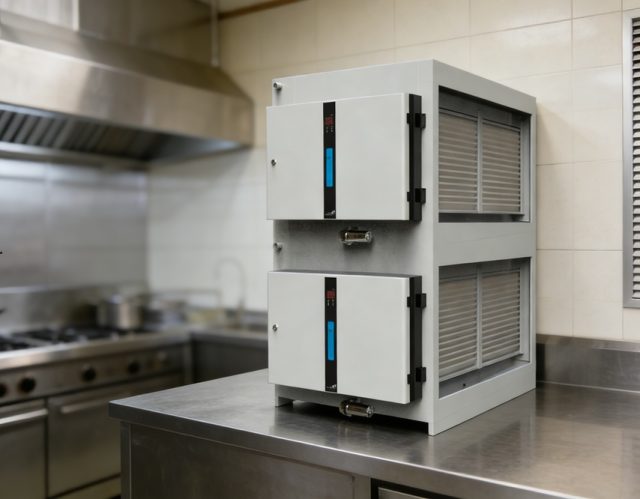
Modern sports and entertainment venues are essentially giant restaurants that happen to have a field or stage. A major stadium may operate 50+ kitchens and food service points — from premium suites to general concessions to back-of-house catering for thousands of staff. Managing air quality across this distributed kitchen network requires systematic design.
| Parameter | Specification |
|---|---|
| Venue Scale | 50-200+ food service points; Kitchens distributed across multiple levels; Peak demand during events (3-4 hours, intense) |
| Design Approach | Distributed ESP at each kitchen point (ductless where possible); Centralized odor treatment on main exhaust |
| Key Challenges | Compressed peak demand; Distributed maintenance access; VVIP/premium area zero-tolerance for odors; Event-day vs non-event-day operation disparity |
| Recommended Models | Light-duty Series (concession stands), Heavy-duty Series/60 (main kitchens), CV-B (premium suite live cooking) |
Application Scenarios
- Premier League stadium premium hospitality (UK): A Premier League football club’s stadium with 100+ premium hospitality suites, each with dedicated kitchenettes, uses Light-duty Series ductless units in each suite. The distributed approach eliminates the need for a centralized kitchen exhaust duct network across the stadium structure — saving an estimated £500,000 in ductwork cost. Suite air quality is independently controlled; a problem in one suite does not affect others.
- NBA arena concessions modernization (USA): An NBA arena replaced aging baffle-filter concession stand hoods with Souniny Light-duty Series ESP during a major renovation. The upgrade addressed long-standing fan complaints about “concourse smelling like fried food.” Post-renovation fan surveys showed a 40% improvement in “concourse atmosphere” ratings. The arena’s F&B director noted that premium concession sales (sushi, craft burgers) increased as the improved air quality made the concourse more inviting for upscale dining.
- Concert venue backstage catering (Japan): A major concert venue in Tokyo with backstage catering for 200+ artists and crew per show uses Heavy-duty Series ductless ESP in the backstage kitchen. The kitchen operates intensely for 6-8 hours on show days, then is idle for 1-6 days between events. The ductless system’s low standby energy and zero maintenance during idle periods make it ideal for intermittent-use venues.
- Olympic venue catering design (multi-sport): Temporary catering facilities constructed for a multi-sport event specified Souniny portable ESP across all venues. The organizing committee’s sustainability plan required that all temporary kitchen equipment be reusable — the Souniny units were redeployed to permanent community kitchens after the Games. The “zero single-use equipment” policy was satisfied, and the units continue to serve community feeding programs.