
Skip to content
Home / Products / Ductless Range Hoods / Heavy-duty Series
Product Series

Heavy-duty Series

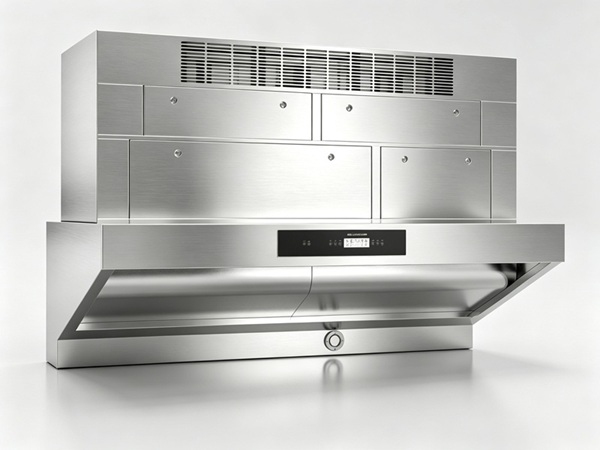
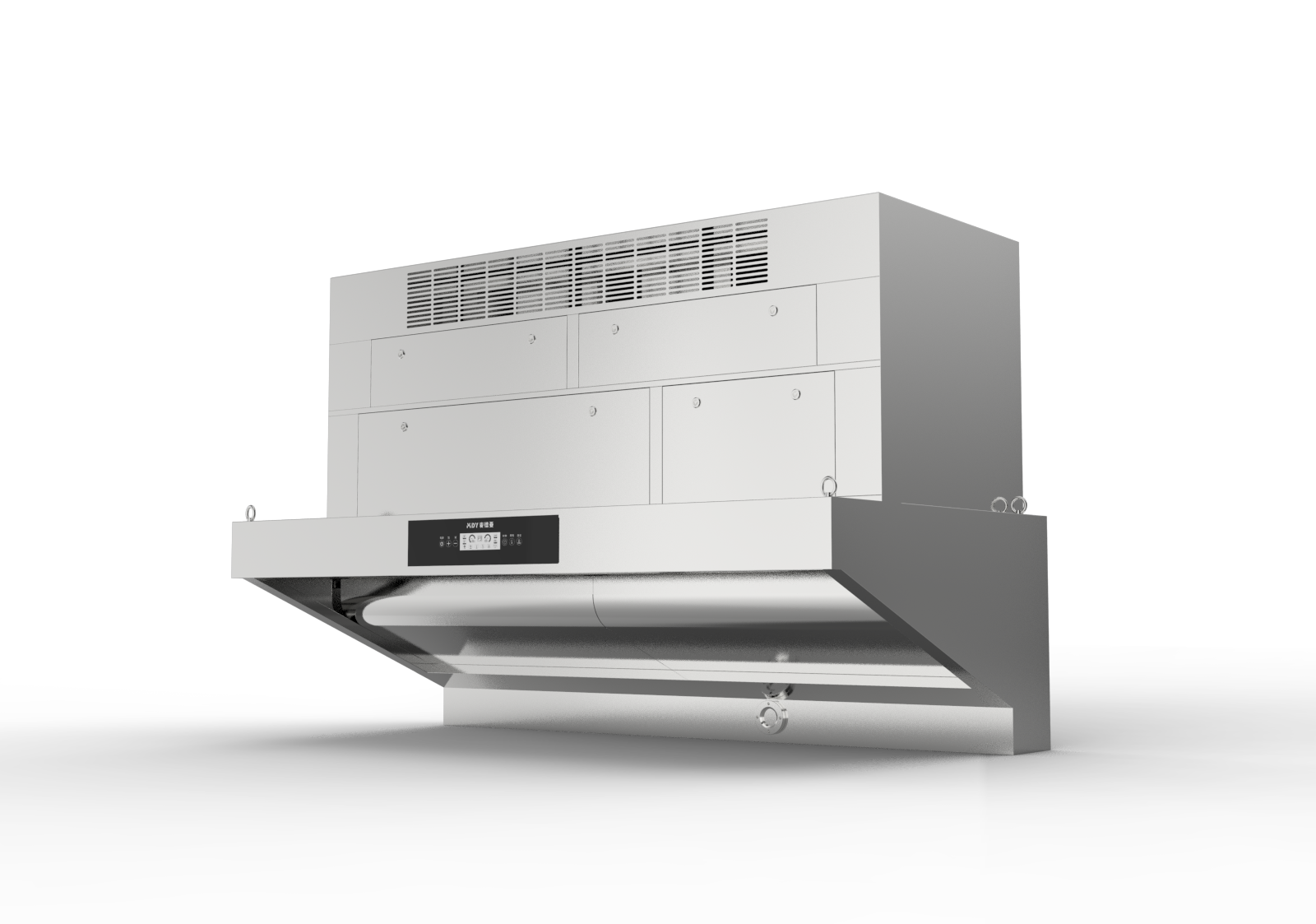
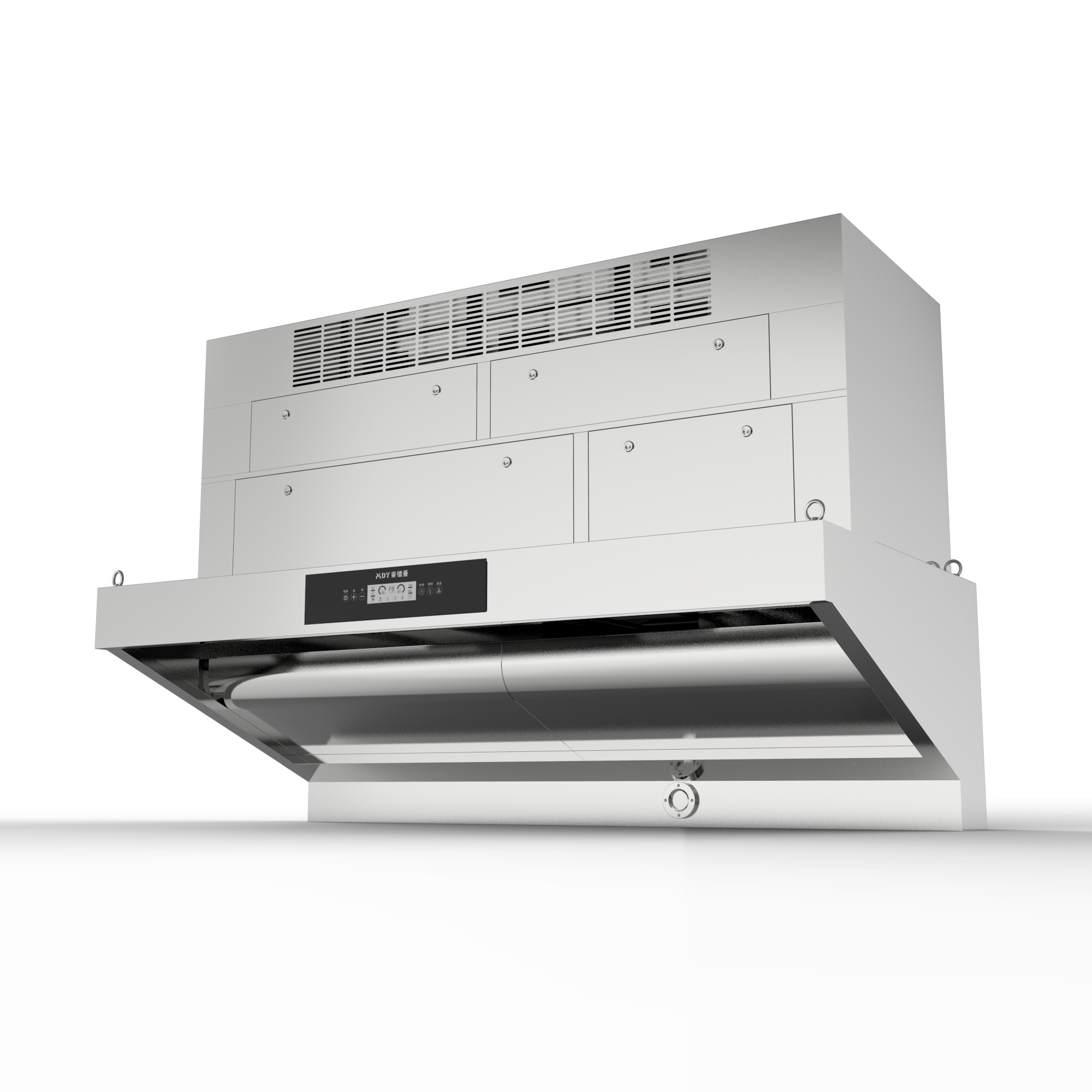
Ductless recirculating unit with water-cycle pre-treatment and multi-stage ESP - built for wok, grill and frying duty with no outdoor duct.

Heavy-duty Series

Overview

The Heavy-duty Series is a ductless recirculating purification unit built specifically for high-grease commercial kitchens. The collection hood, multi-stage filtration train, centrifugal fan and water-circulation system are integrated into a single cabinet, so no external ductwork and no wall penetration are required. Grease-laden air is captured, purified and returned to the kitchen in one continuous cycle – heavy-smoke cooking runs without any outdoor exhaust.

The cabinet is fabricated entirely in stainless steel for Chinese wok stir-frying, charcoal grilling and deep-frying. A touch-screen panel and a nine-speed variable-frequency fan let operators match extraction to the actual smoke load, while the modular layout keeps routine servicing and parts replacement straightforward. It is the practical answer for mall food-court stalls, street-level shops beneath residential buildings, and any premises where ducted exhaust is not possible.

How the Purification Works

The unit follows a combined water-circulation pre-treatment plus multi-stage filtration path, achieving 99% overall purification efficiency. Once the hood captures the plume, the airstream passes through ten sequential zones:

  1. Capture Zone: negative pressure at the hood mouth draws the plume in the moment it rises, limiting spread.
  2. Plume Gathering Zone: straightens and converges the airflow so grease enters the filtration modules evenly.
  3. Liquid-Film Filtration Zone: washing, filtration and cooling happen together, removing around 70% of grease and pre-cooling the airstream.
  4. Mist Separation Zone: blocks 99% of entrained water mist, keeping moisture out of the downstream modules.
  5. High-Voltage Ionization Zone: releases ions that electrically charge the grease particles.
  6. Low-Voltage Collection Zone: captures the charged particles, reaching 95% purification efficiency.
  7. H10 HEPA Zone: removes fine particles below PM2.5 at 99% filtration accuracy.
  8. H14 Nano Filtration + Electret Zone: removes suspended particles below PM1.0 at 99.9% filtration accuracy.
  9. Coconut-Shell Carbon Zone: adsorbs roughly 90% of odour molecules to control smell.
  10. Fan Zone: discharges clean air back into the room, completing the recirculation loop.

Integrated water circulation: a 60 L system with a high-precision liquid-film filtration tank, a one-piece 304 stainless-steel pump and a large turbulence device. Every part is screw-fixed and modular, so the assembly can be stripped down as individual modules. Wet pre-treatment cools and de-greases the airstream before it reaches the electrostatic and filter stages, protecting the downstream components and extending service life.

Key Features

  • Ductless recirculation: no external ducting, no wall coring and no structural change to the kitchen – the cost of traditional flue construction disappears, and heavy-grease cooking becomes viable in premises and mall stalls that have no flue.
  • Deep heavy-grease purification: wet pre-treatment combined with multi-stage electrostatic precipitation and mechanical filtration, tuned for wok cooking, grilling and frying. 99% purification efficiency with no visible smoke and odour handled at the same time.
  • Intelligent variable-frequency control: a touch-screen panel with nine-speed adjustment matches airflow to real-time grease concentration, saving over 40% energy against fixed-speed units. The control board supports RS-485, PLC interlocking, an IoT port and external remote control for smart kitchen integration.
  • High-performance silent fan: a 350 mm multi-blade impeller with aerodynamic profiling and strict dynamic and static balancing delivers high static pressure at low noise. Developed for grease exhaust, it is moisture-proof, oil-proof, heat-resistant and fully enclosed for harsh kitchen conditions.
  • Modular, service-friendly build: core modules can be removed and replaced independently without stripping the whole machine. The water tank and filter modules are easy to inspect, cutting long-term maintenance cost.
  • All-stainless-steel body: resists grease and corrosion in hot, humid commercial kitchens for a longer service life.

Application Scenarios

  • Heavy-Grease Restaurants: wok stir-fry houses, charcoal grill and BBQ restaurants, fried chicken and skewer shops, and private dining kitchens.
  • Premises Without a Flue: mall food courts, shopping-centre kiosks and shop-in-shop units inside mixed-use complexes.
  • Street-Level Units Under Housing: community restaurants directly beneath or beside residential blocks with no route to outdoor exhaust.
  • Restricted Sites: heritage buildings, scenic-area shops and office-building food service where outdoor discharge is prohibited.
  • Open Display Kitchens: open-counter grilling and wok stations where the cooking process stays visible to guests.

Problems It Solves

  • A premises with no exhaust flue, where a heavy-grease concept otherwise cannot open at all.
  • Heavy smoke and odour that trigger repeated complaints from neighbours and the risk of enforced rectification or closure.
  • Mall and property rules that forbid outdoor discharge, restricting which sites can be used.
  • Traditional flue work that is expensive, slow to build and damages the existing fit-out.
  • Ordinary purifiers that cannot cope with heavy grease and fail environmental inspection.
  • Cumbersome maintenance, high labour cost and awkward parts replacement.

Specifications

Parameter Value
Purification Efficiency 99%
Rated Power 1,300 – 2,800 W
Rated Voltage 220 V
Airflow 3,000 – 6,000 m³/h
Water Tank Capacity 60 L
Fan Control Nine-speed variable frequency
Filtration Stages Water cycle + ESP + HEPA + nano/electret + carbon
Body Material Stainless steel

Model Range

Model Dimensions (L×W×H) Efficiency Rated Power Voltage Weight Airflow Body
KL-D-ND12 1200 × 1100 × 1365 mm 99% 1,300 W 220 V 180 kg 3,000 m³/h Stainless steel
KL-D-ND16 1600 × 1100 × 1365 mm 99% 1,800 W 220 V 280 kg 4,000 m³/h Stainless steel
KL-D-ND20 2000 × 1100 × 1365 mm 99% 2,400 W 220 V 330 kg 5,000 m³/h Stainless steel
KL-D-ND24 2400 × 1100 × 1365 mm 99% 2,800 W 220 V 380 kg 6,000 m³/h Stainless steel

Figures are taken from the official product specification sheet (updated 12 August 2025); the shipped configuration of each unit is final.

Certifications & Compliance

Built to Global Standards

Every SOUNINY unit is engineered, tested and supported by a verified commercial-kitchen air-purification manufacturer.

CE

CE Certified

Conforms to EU health, safety and environmental requirements for commercial equipment placed on the European market.

STD

Code Compliant

Designed to commercial-kitchen ventilation standards such as EN 16282 and referenced UL 710 / ASHRAE 154 practices for grease and smoke control.

MFG

Factory-Direct

Made by a National High-Tech Enterprise founded in 2015. Minimum order quantity of 1 unit, with full OEM / ODM customization.

SUP

Warranty & Support

12-month warranty, global shipping and English technical support from our application engineering team.

Manufactured by Shenzhen Shuangni Environmental Technology Co., Ltd. — learn more about our facilities and global projects on the About page.

FAQ

Frequently Asked Questions

It runs without a duct - does it need no plumbing either?
“Ductless” refers to the exhaust path only. No outdoor flue is built and no wall is cored, but the water-circulation body still needs a mains water inlet, a drain point and a power supply. Water and power are operating requirements of the unit; the exhaust duct is a separate matter entirely.
How effective is the purification, and does it remove cooking odour?
The water-scrubbing pre-treatment, the multi-stage ESP cell and the downstream filter train reach 99% overall purification efficiency, with no visible smoke at the hood in normal service. The coconut-shell carbon stage adsorbs around 90% of odour molecules, so smoke and smell are handled in the same pass. Real figures depend on matching airflow to the burner load and keeping the cell on its cleaning schedule.
Where does the cooking smoke actually go?
It is not discharged outside. The plume is drawn in at the hood, washed and cooled in the liquid-film stage, passed through the ESP cell and the filter train, then returned to the kitchen as clean air. Where open-flame burners sit under the hood, the kitchen still needs its own make-up and exhaust ventilation to carry away heat and combustion gases.
How loud is it in a working kitchen?
Normal operation stays at or below 65 dB, about the level of ordinary conversation, with a peak of 68 dB at full load. Nine-speed control lets staff stay below full speed for most of a service, and anti-vibration mounting at the fan reduces noise transmitted into the cabinet.
How much water does it use each day?
The system circulates a stored 60 L charge rather than running water to drain continuously. Daily top-up is about 36 L on the 1600 mm body, 44 L on the 2000 mm and 55 L on the 2400 mm, depending on load and cleaning frequency. The tank is filled, drained and refilled on a schedule.
How often does a heavy-grease kitchen need to clean it?
In heavy-grease service - charcoal grilling, wok frying, Sichuan-style cooking - the ESP cell is cleaned every two to three weeks. Lighter menus stretch to one or two months. Grease accumulating on the collector plates is what degrades performance, so the interval should follow actual load rather than a fixed calendar.
What does cleaning the ESP cell involve?
Power down first; residual charge is released automatically on shutdown. The cell slides out, soaks in a dedicated purifier cleaner with hot water for about five minutes, is rinsed with a water jet, flushed with clean water, dried and refitted. Ceramic insulators are water- and oil-resistant, and the unit carries a 0.05 s short-circuit and earth-leakage trip.
Can water mist reach the ESP cell and cause arcing?
The water circuit and the ESP cell sit in two separate chambers divided by a baffle and a gravity separation section, so spray cannot carry across into the cell. The mist separation stage ahead of the cell also blocks entrained droplets. The cabinet is built to IP65 for washdown conditions.
When do the filter stages need replacing?
The water stage and the ESP collector plates are washed and reused on a one to three month cycle. The medium-efficiency filter is replaced around every six months, and the coconut-shell carbon filter every six to twelve months. Intervals shift with grease load, so the service log is a better guide than a fixed schedule.
What ceiling height does it need?
The integrated bodies need a minimum installation height of 2.7 m. Below that, a split body can be specified so the cabinet and the fan are separated and the unit still fits the room.
How much space must be left around the unit?
Allow roughly 30-50 cm beyond the body on both sides and at the front. Front clearance is set by the ESP cell, which slides straight out for cleaning, so it cannot be blocked by a wall, a counter or stored goods. Headroom must also allow the unit to be lifted into place or served from the floor.
How do I size a unit to my burner count?
Work on airflow per burner: 2,000 m³/h for a baseline burner, 3,000 m³/h where the cooking is heavy-grease - wok tossing, grilling, deep-frying - then add 20 to 50 per cent headroom. Burners under a single hood can share one unit; burners spread across separate stations are better served by separate units.
How many ESP cells are inside, and what are the plates made of?
Cell count follows body length: two cells in the 1600 mm unit, three in the 2000 mm and four in the 2400 mm. Plates are stainless steel 0.4-1.2 mm, press-formed in one piece with twelve folded stiffening ribs, and a single cell weighs about 26 kg. That mass and ribbing are what hold the plates flat under heat and keep collection efficiency stable over years of service.
Does it remove carbon monoxide and other combustion gases?
No. The unit treats grease, smoke particles and odour; it does not remove carbon monoxide, carbon dioxide or other products of combustion. Where open-flame burners are used, the kitchen needs independent make-up air and exhaust ventilation sized to the burners. Treating the hood plume and ventilating the room are two separate design requirements.
What standards and certificates does it hold?
The unit is tested against GB 18483, the Chinese national emission standard for cooking fume, and is supplied with CE marking, CCEP environmental product certification, a CMA third-party test report, ISO quality and environmental system certificates, and a factory inspection certificate. Mall fit-out reviews and environmental inspections generally accept this set. Certification is a starting condition rather than a permanent pass - efficiency has to be maintained through scheduled cleaning.
What does the warranty cover, and can parts be replaced individually?
Cover is agreed in the supply contract. Core components - ESP cell, high-voltage power supply and fan - are replaced free of charge for non-human damage inside the term, with spare parts supplied at parts level afterwards. The pump, for example, is a standard external module that can be swapped without stripping the cabinet, and regional offices hold stock.

Need Help Choosing?

Tell us your kitchen type, required airflow and target market — we'll recommend the right model and send a tailored quote.

Email: info@souniny.com
CHAT
Scroll to Top